Services
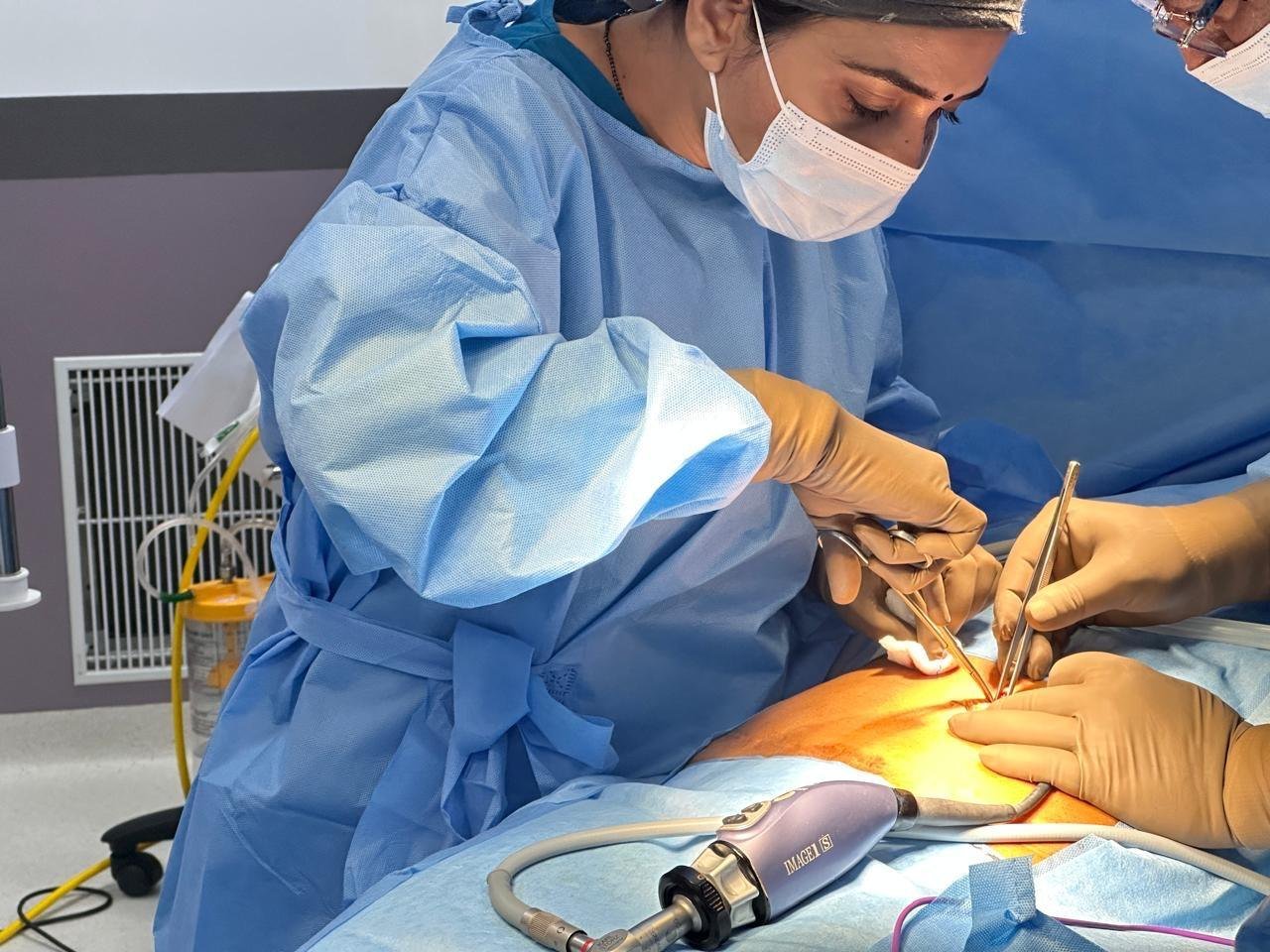
Minimally invasive (laparoscopic) surgery
Where an operation is needed, doing it through small incisions rather than a large one changes the recovery considerably.
I hold the FMAS and DMAS qualifications in minimal access surgery, which I took because so much gynaecological surgery is better done this way than open. Smaller incisions generally mean less pain, a shorter stay, less scarring and a quicker return to ordinary life.
What can be done laparoscopically
- Removal of fibroids (myomectomy), depending on size, number and position
- Treatment of endometriosis deposits and adhesions
- Ovarian cysts, including endometriomas
- Ectopic pregnancy
- Hysterectomy, in many cases
- Diagnostic laparoscopy where the cause of pelvic pain is not clear from scans
When open surgery is still the right choice
Not everything should be done through small incisions. Very large fibroids, extensive adhesions from previous surgery, or certain emergencies are better suited to open surgery. The approach should follow the anatomy and the clinical situation, and I will explain which applies in your case and why.
What to expect
You will know beforehand what the operation involves, what anaesthetic you are having, how long you are likely to stay, and what recovery realistically looks like week by week. You will also know what would make me convert to an open operation during surgery, and how likely that is in your case.
Risks and what to expect
Laparoscopic surgery carries risks of bleeding, infection, injury to the bowel, bladder, ureter or blood vessels, hernia at a port site, blood clots, and the risks of general anaesthesia. An operation started laparoscopically sometimes has to be converted to open surgery, and you will be told in advance how likely that is in your case.
Every procedure carries risk, and the risks that matter most depend on you — your history, your anatomy and your general health. They will be explained to you in full, in writing, before you are asked to consent to anything.
Any recovery times given here are typical rather than guaranteed, and outcomes vary from one person to another.
Every case is different, and what is right for one woman is not right for another. The purpose of a first appointment is to work out which applies to you. Arrange a consultation.
The information on this site reflects current international best practice and peer-reviewed literature, together with Dr Sharma’s own clinical experience. It is general information, not advice for your own situation, and is not a substitute for a consultation.
Related
Talk it through
A consultation is a conversation first. Nothing is booked in until you want it to be.